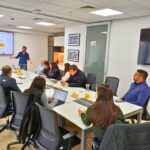

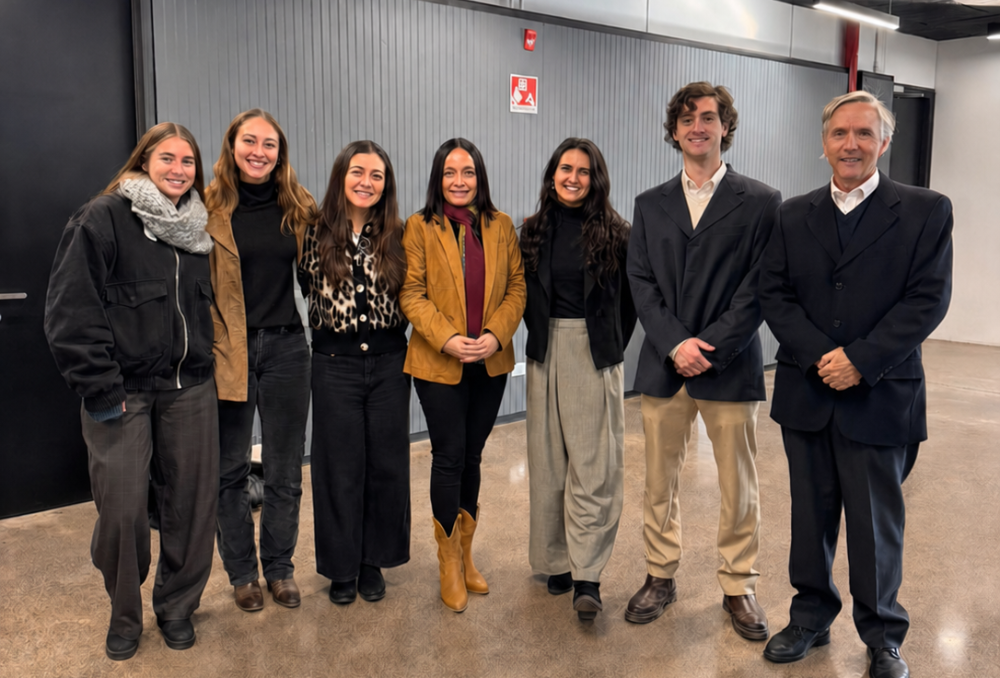
Food innovation and the linkages between academia and industry came together in a new edition of Workshop 5, organized by Universidad Católica’s School of Agricultural Science and Natural Systems. This is the seventh time ChileCarne has participated in the workshop, in which a group of five Agricultural Science and Forestry Engineering seniors take on the challenge of developing an on-the-go pork-based protein snack. The students must assess its commercial and economic feasibility, identifying market opportunities, and its potential to add value. This collaboration aims to bring future practitioners closer to real industry challenges, while promoting innovation, and the development of new foods.
Workshop 5 is a mandatory capstone course for senior undergraduate students. For one semester, they work in the field to solve challenges posed by companies and institutions, analyzing real problems, and developing proposals that are evaluated by industry representatives, an experience that replicates project design and assessment in the real world.
This year, the students’ mission was to develop an on-the-go protein snack made with Chilean pork, responding to new consumption trends that favor healthy, convenient, high protein foods. They analyzed local and international trends, market size and potential, competition, consumption habits, customer segments, the commercial and financial feasibility of the project, and its main risks, with the aim of identifying opportunities to add value to Chilean pork.
In the end, the team developed a proposal for a pork-based protein snack, exploring new ways to innovate in food and expand consumption options of this protein. The project included defining the product’s concept, value proposition, nutritional qualities, target audience, market positioning strategy, and a preliminary estimate of costs and profitability, as well as developing a branding and packaging proposal.
This is the seventh time ChileCarne has participated in the program, reaffirming its commitment to innovation and collaboration between academia and industry. This type of initiative allows for the incorporation of new perspectives to develop added value foods and strengthen the competitiveness of Chilean pork.