

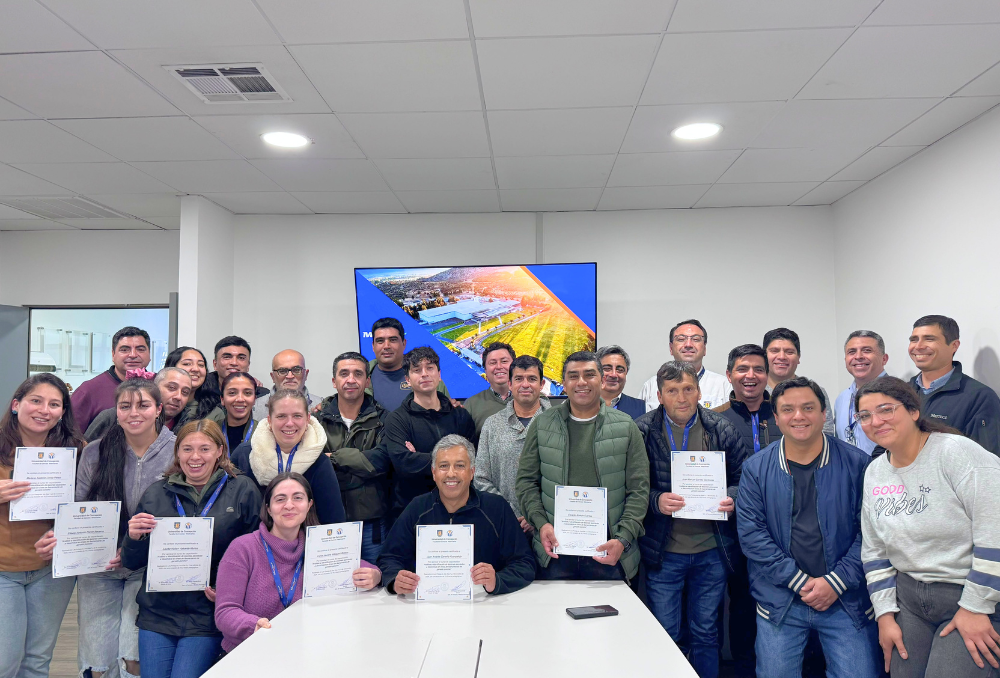
Ongoing training for professionals and technicians in the swine sector is essential to strengthening veterinary inspection practices and ensuring the quality and safety of meat products. The University of Concepción’s School of Veterinary Sciences, through its Department of Pathology and Preventive Medicine, organized the course “Analysis and Identification of Pathologies and Lesions on Swine Slaughter Lines” on October 1 and 2, in collaboration with ChileCarne and the Agricultural and Livestock Service (SAG).
The course was designed for professionals and technicians responsible for inspections at slaughter plants, including those from the SAG and export companies. It aimed to provide participants with the theoretical and practical tools needed to recognize and describe injuries, understand their potential causes and effects, and make differential diagnoses of the primary diseases and conditions affecting swine.
The course was taught by an academic team with extensive experience in teaching, research, diagnosing animal diseases, and training agricultural professionals. The team included Dr. Álvaro Ruiz, Ph.D., a veterinarian with over 28 years of experience diagnosing swine diseases; Dr. Sergio Donoso, a veterinarian with a master’s degree and over 23 years of experience in pathological diagnosis; and Dr. Reinaldo Letelier, a veterinarian with a master’s in veterinary sciences and over 17 years of experience in meat quality and food safety.
Topics covered included primary diseases and conditions of the circulatory, respiratory, and digestive systems, as well as disorders affecting the liver, kidneys, and other organs and tissues. The mechanisms of action of pathogens and the primary transboundary diseases affecting pig farming were also discussed. The program covered General Technical Standard No. 62 and the role of the veterinarian at the slaughter plant.
The course combined theoretical sessions with hands-on activities on the slaughter line, case studies, and the identification of injuries and abnormalities in swine organs and carcasses. These activities enabled participants to expand their technical knowledge and apply it to real-world situations in the production process.
By collaborating on training activities such as this one, ChileCarne helps keep professionals and technicians in the pork industry up to date on the latest knowledge and strengthens their technical skills—key factors for animal health and for maintaining high standards of quality and safety in the domestic production of pork and pork byproducts.