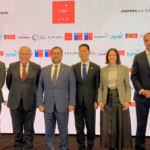

The meeting showcased the production capabilities and export track record of Chile’s pork and chicken sectors and discussed opportunities and challenges to strengthen trade between the two countries.
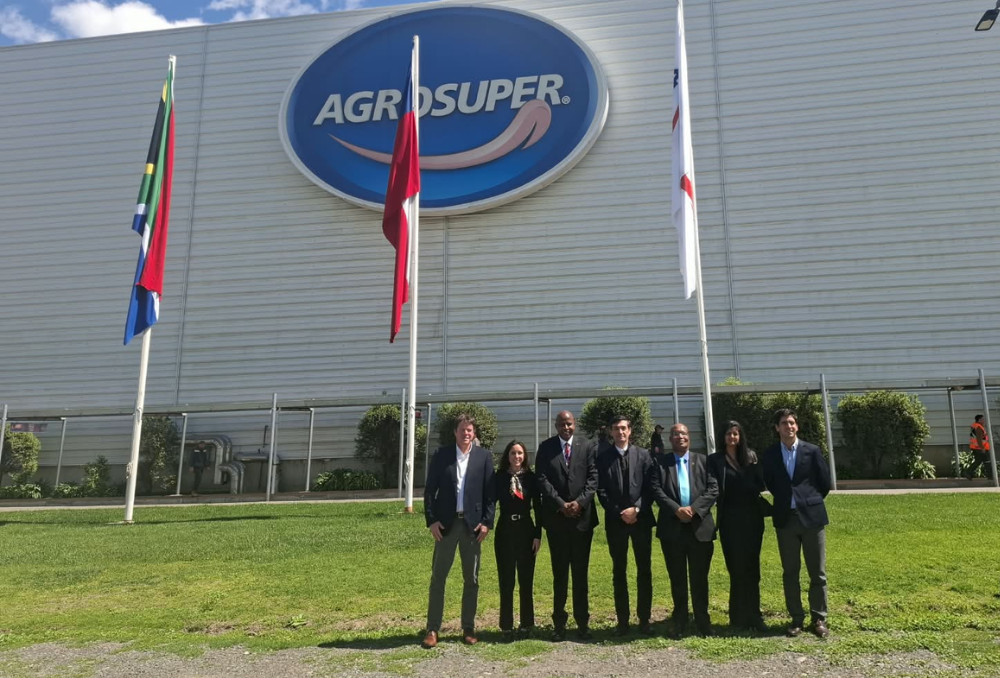
On October 1, the South African Ambassador to Chile, George Motlatjo Monyemangene, visited the Agrosuper plant in Rosario. The visit aimed to strengthen trade ties between the two countries and explore opportunities for Chilean pork and chicken exports.
During the visit, ChileCarne and Agrosuper presented an overview of Chile’s pork and poultry industry, its export history, and its capacity to supply international markets. ChileCarne was represented by Rodrigo Castañón, Business Manager, and Agustina Page from the Foreign Trade department. Agrosuper was represented by Nicolás Rosenfeld, International Sales Manager, and Martín Zañartu, Head of Public Affairs. The meeting provided firsthand insight into Agrosuper’s production processes and a forum to discuss ways to strengthen and expand trade relations with the African nation.
The conversation also addressed challenges associated with accessing the South African market, including tariff conditions and health requirements that imported products must meet. In this context, dialogue between diplomatic representatives and private-sector stakeholders is essential for identifying barriers, understanding market demands, and exploring alternatives that contribute to the development of new business opportunities.
South Africa: A gateway to new destination markets
South Africa offers not only a trading partner but also a gateway to the African continent. This region presents an opportunity for Chile to grow and diversify its export destinations. Closer ties with this market offer an opportunity to strengthen relationships, identify new avenues for cooperation, and continue positioning Chilean meat in the global market.
South Africa maintains import demand for pork that supplements its domestic production. According to Interporc data, the country imported between 28,000 and 47,000 metric tons of pork products annually between 2015 and 2022. In 2022, imports totaled 34,876 metric tons, valued at €65.3 million EUR, while apparent consumption reached 310,800 metric tons—a 29.3% increase from 2015.
There are opportunities in frozen products, offal, and raw materials for industrial processing, which are key categories within South African imports. According to the cited sectoral data, meat, offal, and bacon collectively accounted for nearly 88% of the volume imported in 2022. South Africa purchased approximately 58% of its pork products from Spain, Brazil, and the United Kingdom, indicating the presence of well-established international competitors.
These figures show that South Africa has an active import market for pork products, creating opportunities for Chile to expand its exports. To capitalize on this, it will be essential to understand buyers’ needs and market-access conditions, while also accounting for the presence of established international suppliers.
Along with health considerations, tariff and trade conditions are key determinants of export competitiveness. Therefore, dialogue among government officials, diplomatic representatives, and private-sector stakeholders helps identify challenges, exchange strategic information, and further evaluate opportunities for Chilean meat products.
Meetings like this one allow ChileCarne and its member companies to showcase the production capabilities and international experience of the national pork and poultry sectors, helping to build stronger ties with key markets and diversify export destinations.