
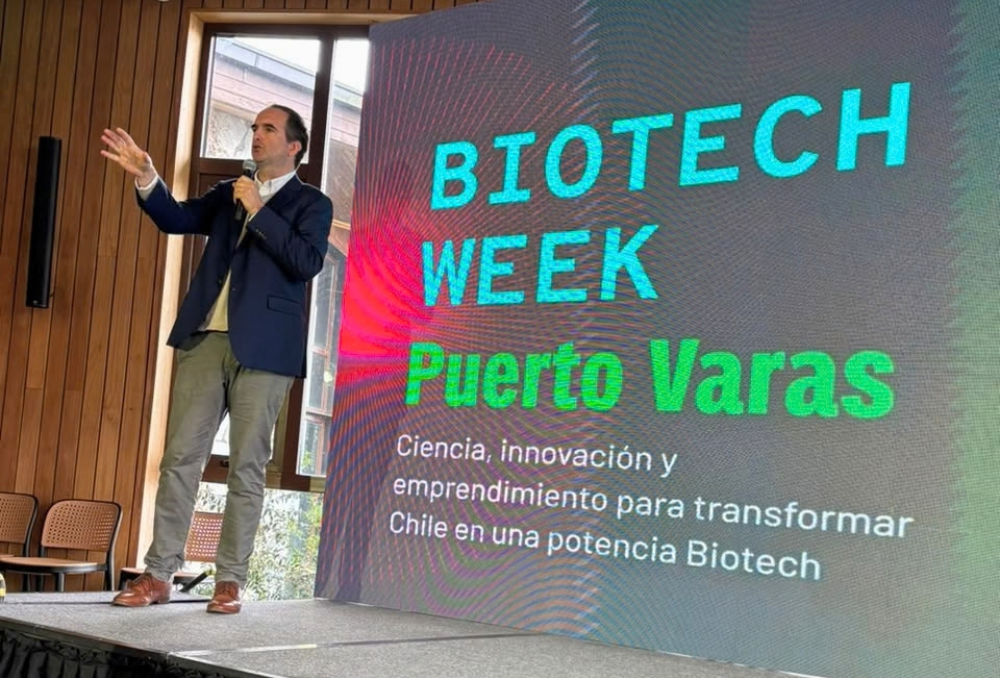
During Biotech Week 2026, ChileCarne discussed the sector’s main challenges, including animal feed, biosecurity and food safety, and byproduct valorization. The association emphasized that science, innovation, and technology can help make production more efficient and sustainable.
Pork and chicken production face a number of challenges where biotechnology can open new opportunities to streamline processes, strengthen biosecurity and food safety, and increase the recovery of resources and byproducts. These issues were presented by ChileCarne during the Reverse Pitch at Biotech Week 2026, an event that presented the sector’s needs to startups, technology centers, universities, and other stakeholders in the innovation ecosystem.
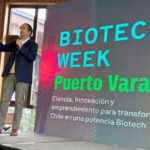
Speaking on behalf of the sector, ChileCarne’s president Juan Carlos Domínguez outlined three priority areas: animal feed, biosecurity and food safety, and byproduct recovery. His presentation highlighted how science, innovation, and biotechnology can provide actionable solutions to real-world production challenges.
From September 8–10, Biotech Week took place in Puerto Varas, bringing together more than 1,200 participants and 91 speakers from science, industry, entrepreneurship, and the public sector. On the third day, SOFOFA, the Federation of Chilean Industry, and its Hub’s Center for Translational Biotechnology (CBT) hosted «Connect to Scale,” a Reverse Pitch event in which companies from various industries presented specific challenges to startups, tech hubs, universities, and other innovation ecosystem players. More than 300 people attended.
Companies such as Carozzi, Veterquímica, Watt’s, and Concha y Toro winery participated alongside ChileCarne, highlighting a wide range of industries turning to biotechnology to address real production needs.
Three issues where biotechnology can make a difference
Speaking on behalf of the pork and chicken sectors, Juan Carlos Domínguez outlined three areas where biotechnology can yield new solutions: animal feed, biosecurity and food safety, and byproduct recovery. These areas address specific industry needs, and biotechnology can improve processes, optimize resources, and promote more efficient and sustainable production.
«From a production standpoint, we are aware of the challenges we need to overcome. Today, there is an ecosystem of science, technology, and entrepreneurship that can help us address them. The key is to bring people together and develop solutions that can be tested and applied in the sector,» said Domínguez.
New avenues for more efficient and sustainable production
Animal feed is a key area of opportunity, as it accounts for nearly 70% of production costs. The challenge lies in developing new alternatives by incorporating new protein sources, improving nutritional efficiency, and exploring ways to convert biomass and byproducts into new feedstocks.
One example cited during the conference was GLTB, a Chinese company that produces yeast protein from industrial CO₂. Through a biotechnological process, this compound is converted into a protein source for animal feed that has already been approved for that use.
Beyond this specific technology, the case offers insight into a line of development that could shape the sector’s future: harnessing resources from one process to use them as inputs for another. This opens up new possibilities for improving efficiency and making better use of available resources.
The search for new tools also extends to biosecurity and food safety. One of the main goals in this area is to reduce microbial levels throughout the production chain, from farm to slaughterhouse. This requires a strong focus on prevention, as well as the development of alternatives to keep microorganisms at bay, disinfect facilities, and sanitize products.
One of the cases presented was a method developed in Chile to control Salmonella using bacteriophages, which are viruses that target specific bacteria. Under simulated conditions, this technology reduced Salmonella levels by 1.5 log, equivalent to about a 97% reduction in the number of bacteria.
Although it still needs to be tested directly at the plant, this finding shows the potential of biotechnological tools to meet specific production needs and, once the testing phases are complete, to be implemented under real-world operating conditions.
The spotlight also fell on a challenge directly related to sustainability: turning a cost into a resource. Treating slurry and solid manure can make processes more efficient, improve solid separation, reduce odors and emissions, and enable new ways to recover value.
The opportunity lies not only in reducing the environmental impact of these byproducts but also in finding solutions that make better use of them and create value.
Accordingly, the conference also featured presentations on bio-based solutions being developed in Chile. These alternatives use organisms, microorganisms, or biological processes to address problems that have traditionally been treated with conventional methods. These solutions have been used to manage odors and improve processes for treating byproducts.
Developing alternatives like these also presents an opportunity to improve waste management, environmental stewardship, and production efficiency simultaneously. This makes it possible for resources that currently incur treatment costs to add new value through solutions grounded in technology and expertise.
Taken together, the cases presented show that what biotechnology offers for meat production goes beyond simply incorporating new technologies into existing processes. They also point to a need to rethink how resources are used, risks are prevented, and byproducts are handled, with a focus on improving the sector’s efficiency and sustainability.
Connecting innovation with production needs
ChileCarne’s participation in this event is part of a broader conversation about how biotechnology can contribute to the competitiveness and productivity of productive sectors. For SOFOFA Hub’s CBT, meetings like this are intended to help bridge the gap between existing scientific and technological capabilities and the specific needs of companies.
The Reverse Pitch was an opportunity to directly address the challenges of meat production by connecting them with the capabilities of the innovation ecosystem.
For ChileCarne, the next step is to forge partnerships with startups, tech hubs, universities, and other stakeholders who can address these needs and help ensure that projects currently in their early stages can successfully transition to testing under real-world production conditions.
«We have the opportunity to connect capabilities, often developed outside the sector, with very specific production needs. The next step is to test and validate them in the field and see how they can be transformed into effective tools for more efficient, safer, and more sustainable output,” said Domínguez.
Building on the challenges and topics raised during the event, the CBT will follow up on the identified opportunities and potential avenues for collaboration to connect the sector with startups, tech hubs, universities, and other stakeholders capable of developing and testing solutions for real-world production scenarios.
The Reverse Pitch made it possible to bring the needs of the meat sector directly into contact with the scientific, technological, and entrepreneurial communities. This link opens new possibilities for developing practical solutions and advancing a key goal for the sector: ensuring that knowledge and innovation can be translated into concrete tools to address current and future production challenges.