
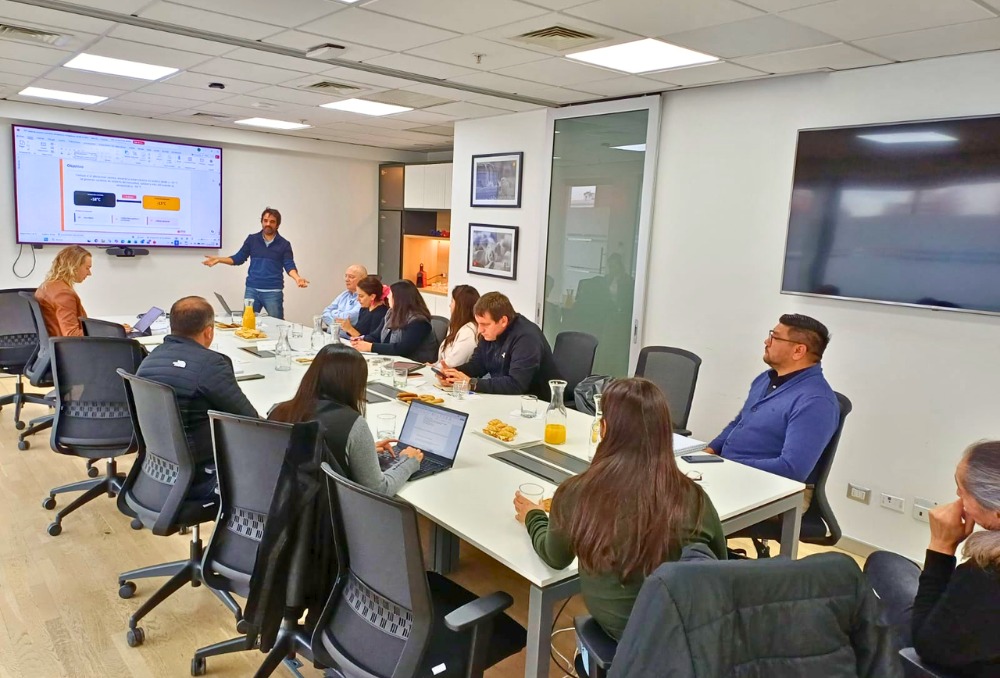
On September 24, ChileCarne held a meeting at its offices with representatives from its member companies and the Ministry of Health to assess the project’s progress. The discussion focused on the regulatory update to the Food Sanitation Regulations (RSA) and the relevant international Codex standards. The meeting also analyzed the proposed shelf life to accommodate the increase in freezing temperature to -15 degrees Celsius, as well as the association’s participation in the international Move to Minus 15°C initiative.
Adriana Schain, a representative from the Ministry of Health who leads this initiative on the government side, presented progress on the proposed amendments to the Codex texts and the Food Sanitation Regulations (RSA) during the event.
The study will evaluate how storing chicken and pork meat, offal, and byproducts at -15 °C for up to 24 months affects their safety, quality, and shelf life.
The resulting evidence will have sector-wide and regulatory scope, providing a basis for updating the Codex Alimentarius and national regulations. The findings will also enable each operator to define the quality and shelf life of their products.
The international Move to -15°C initiative includes end-to-end pilot projects, independent academic research, and regulatory discussions. The initiative aims to transition to a freezing temperature of -15°C for frozen foods. The goal is to reduce energy consumption and emissions associated with the cold chain while maintaining product safety, quality, and shelf life. Within this framework, ChileCarne is contributing to the development of technical evidence to evaluate the feasibility of this change for pork and poultry products.
Representatives from ChileCarne’s member companies attended the meeting: Agrosuper (with plants in Lo Miranda, La Calera, and Rosario), Maxagro, Precisa Frozen, Goldenfrost, Coexca, Don Pollo, and Ariztía (a non-member company).