
From August 30 to September 6, Indonesian authorities conducted an audit in Chile as part of the market-access process for Chilean meat. With 283 million inhabitants, a young population, a growing tourism industry, and the potential for pork consumption to increase by more than 30% over the next decade, Indonesia offers Chile an opportunity to diversify its exports and strengthen its presence in Southeast Asia.
Access to new markets begins long before a product reaches consumers’ tables. When it comes to meat, one of the first steps is to demonstrate that every consignment is backed by a system that guarantees its hygiene, safety, and traceability. That is precisely the path Chile is following in Indonesia.
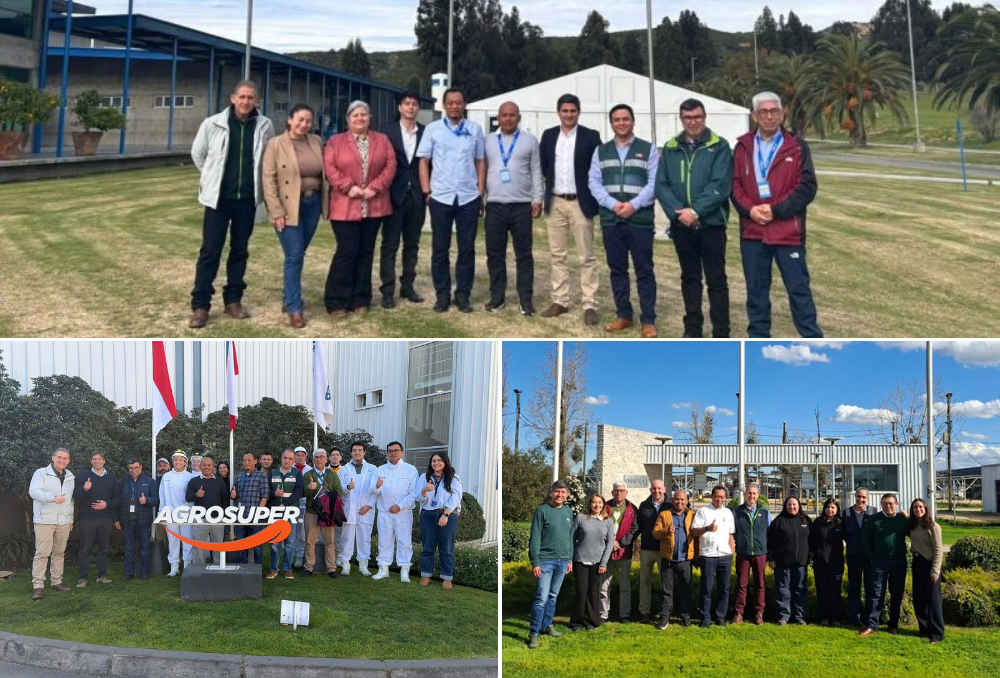
From August 30 to September 6, Indonesian officials visited Chile to learn firsthand about the systems, processes, and controls behind Chilean meat production and exports. The audit included a rigorous technical review and coordination with several Chilean stakeholders, with the aim of showcasing the sector’s health and food safety standards.
The visit required careful preparation, with ChileCarne playing a key role. The association planned and coordinated the Indonesian delegation’s travel, prepared the agenda, and organized each on-site visit. These efforts were carried out in coordination with the Agricultural and Livestock Service (SAG), the Chilean Agricultural Attaché Office in Indonesia, and participating member companies.
This allowed the Indonesian authorities to gain firsthand insight into the processes and controls that underpin the production and export of Chilean meat, as well as the work behind every link in this system.
The audit is a significant step toward market access and underscores the importance of public-private collaboration in identifying new export opportunities. It also enabled the Indonesian delegation to gain a deeper understanding of the Chilean system and its mechanisms for ensuring food safety and quality.
Indonesia: A large market with room to grow
Given the market’s characteristics, opportunities abound. It is the most populous country in Southeast Asia, with approximately 283 million people, and its population is young: 56% is under 35 years of age. The tourism and food industries are also growing, helping to expand and diversify demand for animal-based foods and proteins.
In 2024, the country welcomed 13.9 million international visitors, primarily from China, Japan, Australia, Singapore, the United States, and Europe. This is particularly significant for the meat industry in tourist hotspots, which attract large numbers of non-Muslim consumers and offer diverse international culinary scenes.
Understanding the market’s demographic makeup is also key. Approximately 87% of Indonesia’s population is Muslim and does not eat pork for religious reasons. While this limits the reach of the pork market, it also creates targeted opportunities in certain segments and regions. Approximately 37 million non-Muslims, along with demand from tourism, the hotel industry, and the restaurant sector, create additional opportunities.
It is precisely in these contexts that international suppliers are showing greater interest.
Pork consumption could grow by more than 30%
Although Indonesians eat relatively little meat compared with other markets, several factors could drive growth in the coming years. Urbanization, a young population, a growing middle class, and the expansion of tourism and international cuisine are creating new opportunities for protein consumption, especially among those who do not eat pork.
Total meat consumption currently stands at about 11 to 12 kilograms per person per year. Chicken accounts for more than 60% of that total, beef for more than 26%, and pork for about 9%.
Projections also indicate growth in pork consumption. In 2024, pork consumption reached approximately 269,900 metric tons, or 0.95 kilograms per capita. Based on OECD-FAO estimates, this figure could increase by more than 31% between 2023 and 2033, reaching nearly 355,000 metric tons.
This expected increase in demand is significant not only for its potential scale but also for the evolving nature of foreign trade.
Indonesia is highly self-sufficient, with domestic supply levels at 97%-98%. As a result, foreign purchases currently account for less than 3% of internal consumption. However, imports of meat and pork products increased by 51.5% year over year, reaching 7,527 metric tons in 2024. This figure is 253.5% higher than the volume recorded in 2020.
Although this remains a limited market for international suppliers, the rise in imports signals demand for foreign products. Chilled and frozen meats, in particular, account for the lion’s share of purchases, creating opportunities for suppliers who can meet the needs of importers, distributors, processors, and food service providers.
Diversifying destinations to sustain growth
For Chile, obtaining sanitary approval for market access would not necessarily mean competing in a mass market right away. Instead, the opportunity lies in targeting market segments where the characteristics of Chilean products, such as food safety and reliable supply, can make a difference.
Bali and other parts of the country with higher non-Muslim populations, Chinese communities, and thriving tourism industries are among the most promising markets. Growth in the hotel industry, international restaurants, and other tourism-related sectors is increasing demand for products not typically consumed by the Muslim majority.
There is also a trade advantage. In 2019, Chile and Indonesia entered into a Comprehensive Economic Partnership Agreement (CEPA) that established preferential tariff conditions. The main pork product lines fall under a tariff-reduction category with a gradual rate cut: from 3.5% in 2026 to 2.5% in 2029.
This means that health authorization is more significant than merely opening a new market. For an export-oriented sector like Chile’s, access to new markets enables expanded sales opportunities, diversifies risk, and strengthens Chile’s presence in regions where protein consumption continues to grow.
The audit conducted in Chile marks a new milestone in this process. The challenge now is to continue advancing the technical groundwork needed to finalize health authorization and add Indonesia to the list of destinations for Chilean pork and chicken.