The USTR decided to impose an additional 12.5% tariff on Chilean poultry and pork exports, even though ChileCarne presented a robust technical and commercial defense in coordination with government officials and the export sector, reaffirming Chile’s position as a reliable supplier committed to the highest labor and health standards.
Following several months of investigation by the United States Trade Representative (USTR) into compliance with forced labor regulations, the agency decided to impose an additional 12.5% tariff on Chilean poultry and pork exports.
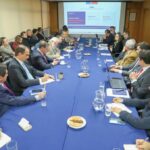
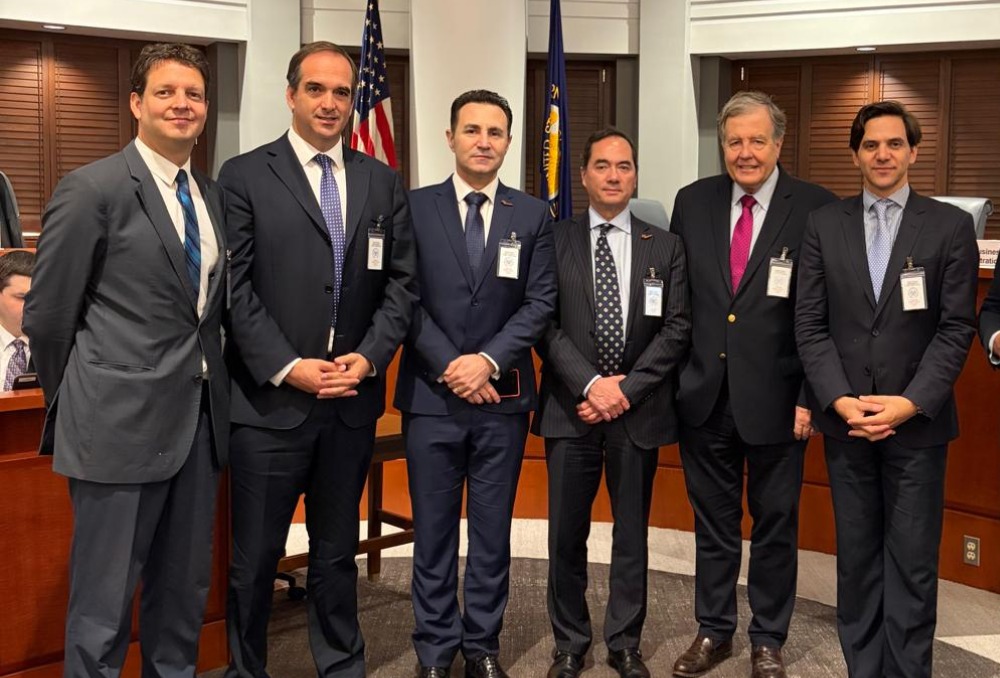
Throughout the investigation, ChileCarne actively defended the industry’s interests, speaking at the public hearing held in Washington, D.C., and submitting written comments to request the exclusion of Chilean poultry and pork from the decision.
The strategy was implemented in close coordination with the Ministry of Foreign Affairs, the Undersecretariat for International Economic Affairs (SUBREI), the Chilean Federation of Industry (SOFOFA), and the country’s main export associations.
In his presentation before the USTR, Juan Carlos Domínguez, President of ChileCarne, emphasized that Chile has a robust legal framework that bans and punishes forced labor, fully complies with the labor commitments established in the Free Trade Agreement with the United States, and that there is no evidence linking the Chilean meat industry to the practices that prompted the investigation.
Furthermore, the association emphasized that Chile is one of the few countries authorized by the Food Safety and Inspection Service of the United States Department of Agriculture (USDA-FSIS) to export poultry and pork to the US, a determination that recognizes the equivalence of its official inspection system and its high standards of animal health, food safety, and traceability.
ChileCarne also argued that Chilean exports account for only a small share of the US market, and that bilateral trade is complementary, benefiting producers, importers, distributors, and consumers in both countries.
Although the final decision did not exclude pork and poultry, the process was an opportunity for the records to show the technical, health, labor, and commercial background information that supports Chile’s position and strengthened the coordinated work between the public and private sectors in defending the country’s interests.
Regardless of the outcome, the investigation also reaffirmed the importance of mechanisms for objective and verifiable proof of compliance with Chile’s high labor standards throughout the entire supply chain.
The recent inter-ministerial statement signed by the undersecretariats of the Interior, International Economic Affairs, Labor, and Human Rights is particularly relevant because it affirms the Chilean government’s commitment to the implementation of the 2026-2030 Action Plan of the National Policy for the Eradication of Forced Labor (PANTRAFOR). The initiative will contribute to strengthening Chile’s institutional framework in this area and to reinforce the confidence of international markets in Chile’s labor standards.
Juan Carlos Domínguez, President of ChileCarne, stated: «Although we respect the decision made by the United States, we believe that the data presented during the investigation showed that Chile is a clearly different case. As an industry association, we will continue working with the authorities and our member companies to assess the effects of this measure and safeguard the competitiveness of Chilean exports.»
ChileCarne will continue working with government officials, its member companies, and other relevant parties to monitor the implementation of the tariff, assess its impact, and promote actions that strengthen Chile’s reputation as a reliable food supplier, based on high health, labor, and sustainability standards.