
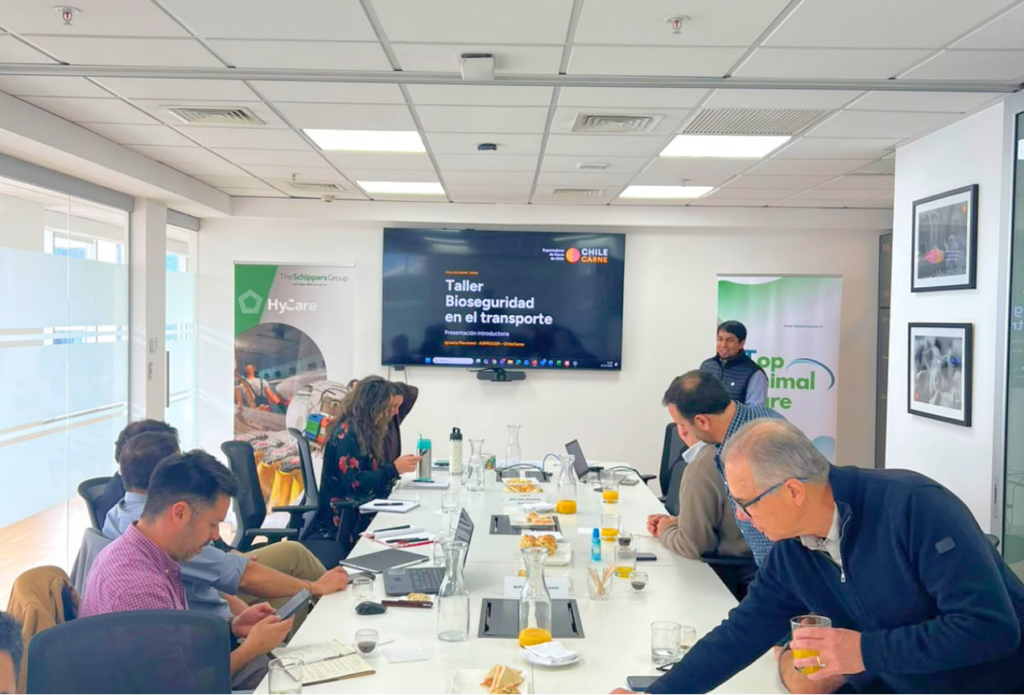
On October 23, ChileCarne held a new edition of ChileCarne Talks titled “Biosecurity in Animal Transport: Effectiveness, Risks, and Challenges for Chile.” Representatives from ChileCarne’s leading poultry and swine producers and industry experts attended the panel to analyze the risks of pathogen transmission between farms and the measures needed to strengthen biosecurity during animal transport.
Ignacio Marchant (Head of Pig Health) and Carolina Larraín (Head of Poultry Health) from ChileCarne led the talk, which featured César Núñez Zena, Global Head of Swine Biosecurity at The Schippers Group. Dr. Núñez presented the lecture «Effectiveness of the Cleaning and Disinfection Process and Implications for Disease Transmission Between Farms» remotely, sharing international experiences from Europe, Asia, North America, Brazil, and Australia.
During his presentation, the specialist discussed the effectiveness and importance of cleaning and disinfection processes in preventing the spread of infectious agents when animals and vehicles travel between production facilities.
The event also featured a panel discussion moderated by the ChileCarne team and sponsored by Top Animal Care. The panelists analyzed biosecurity protocols for transporting swine and poultry, focusing on operational challenges, key implementation points, and opportunities for improvement.
One of the biggest challenges is ensuring that biosecurity protocols are effectively implemented on the ground. To achieve this, established procedures must be supplemented with scientific evidence, international experience, and knowledge of local operational conditions. This approach helps identify gaps and develop concrete improvements to reduce health risks.
Through ChileCarne Talks, the Association continues to promote technical updates and the exchange of knowledge on topics relevant to pork and poultry production and export, helping strengthen biosecurity and prevent health risks in the sector.