
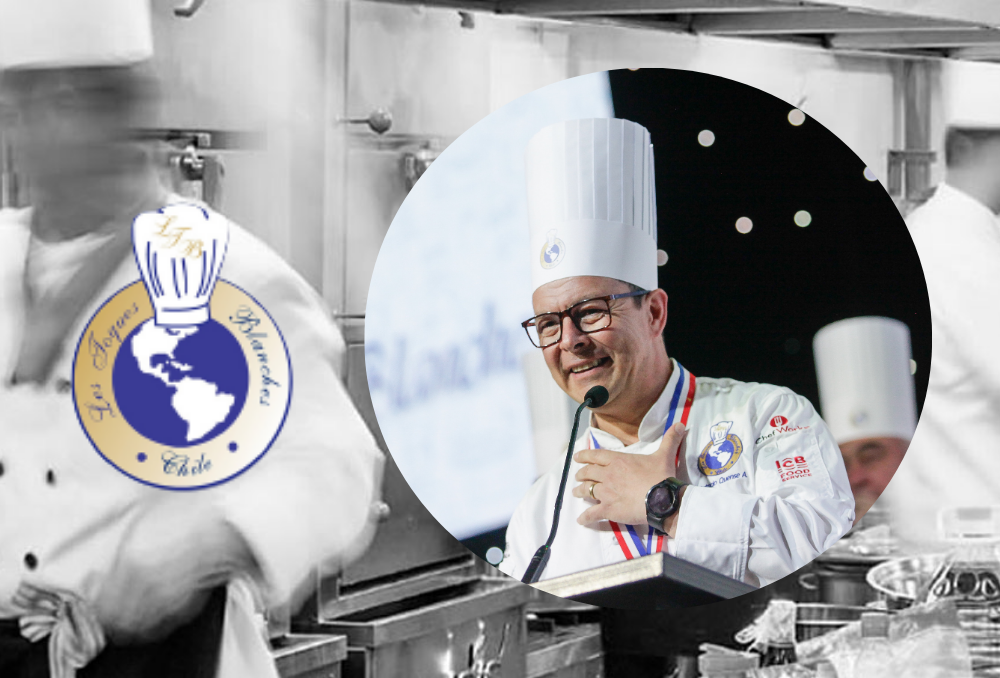
Chilean Cuisine Day is celebrated on April 15, a celebration that seeks to highlight the country’s traditional cuisine as a key part of its cultural identity. The 2025 Report on Chilean Cuisine, published by the Association of Chilean Chefs, Les Toques Blanches, along with the insights of its president, Patricio Qüense—who also serves as INACAP’s National Director of Gastronomy—provides a glimpse into how the country’s culinary tradition is experienced, valued, and envisioned today. Everyday ingredients such as chicken and pork play a central role in its development and growth.
Culinary heritage goes beyond recipes: it represents memories, places, and community. In a country with a diverse, ever-evolving cultural identity, cuisine has become a common ground that connects generations, strengthens a sense of belonging, and reflects a shared history.
The 2025 Report on Chilean Cuisine—developed by the Association of Chilean Chefs, Les Toques Blanches—confirms the depth of that connection. 88% of Chileans consider cuisine to be a fundamental part of the country’s cultural identity, while 8 out of 10 eat Chilean food at least once a week. More than just habits, these figures reflect pride in and a close connection to a tradition that remains very much alive today. With this in mind, Patricio Qüense highlights the role of certain ingredients in everyday life: “Chicken and pork hold a special place in our diets because they are such common staples. They are the cornerstones of our daily diet: versatile, affordable, high-quality proteins that bridge the gap between traditional cuisine and more sophisticated dishes,” he notes.
“We are living in a time of reconnection. Chilean cuisine is no longer just a matter of nostalgia; it is a living force for social cohesion,” he adds, highlighting the sustained work of Les Toques Blanches over the past 34 years to showcase the country’s culinary heritage.
The association has promoted an inclusive approach that brings together stakeholders and communities: “Today we have united the regional pantry thanks to our presence throughout Chile and our collaborative work through the ‘Chile, Te Quiero Comer’ initiative, crafting a narrative for Chileans to not only embrace but also proudly champion to the world.”
Flavors endure, formats evolve
The deep roots of this tradition come to life in dishes that have been passed down through generations. Dishes such as stews, sweet corn pie, and beans are not only part of the traditional repertoire but also of the country’s collective and emotional consciousness.
There is also the huaso roll—made with pork, pork skin, chili peppers, garlic, and spices—a dish that reflects country living and makes full use of the ingredients. Along with seafood, these are some of the “star” dishes of the country’s cuisine.
The evolution of Chilean cuisine has been marked by an increasingly professional industry, which has made it possible to adapt these dishes to new formats and settings. At the same time, reaching younger generations has become more challenging. The study reveals that 62% of respondents feel that young people are losing touch with local cuisine.
With this in mind, haute cuisine offers an opportunity to bridge that gap. “We have to transform a dish that 25% of people identify as the main symbol of our cuisine into a unique selling point, without taking away from its essence,” says Qüense.
Following this trend, a new generation of chefs is reinterpreting these flavors with a contemporary twist, combining technique, innovation, and respect for ingredients. Ingredients with deep cultural roots, such as fresh and dried chili peppers, serve as the foundation for new dishes, where the versatility of chicken and pork allows chefs to take everyday fare and transform it into more elaborate culinary creations.
“They’re doing a great job, combining technical expertise with new technologies, but always with the utmost respect for Chilean products. The trend is a return to simplicity done right, with local produce and the traceability that today’s customers demand and value,” explains Qüense, noting that this shift is supported by ongoing education and the professionalization of the industry.
“The potential is in the format: bringing these traditional flavors from the pot to the table in a modern way, by investing in innovation and strengthening collaboration between producers and cooks.”
In this transformation, proteins like chicken and pork play a key role. Their availability and diversity of uses make them a key staple in both traditional cuisine and its progression towards more sophisticated dishes, serving as a natural bridge between home cooking and haute cuisine.
Quality, identity, and visibility
The appeal of Chilean cuisine lies not only in its dishes but also in the quality of its ingredients. The production of meats such as chicken and pork in Chile has reached high standards, reinforcing the country’s culinary identity and offering attributes that are more and more important to consumers.
“We need to make it clear that quality is a defining characteristic. If we can show that tradition goes hand in hand with the safety and excellence of our meat production, we’ll be sending a powerful message: eating Chilean means you’re getting a guarantee of origin, flavor, and animal welfare,” says Qüense.
The study reinforces this view: 89% believe it is important to keep culinary traditions alive, which opens a concrete opportunity to strengthen the link between food culture and local produce.
At the same time, international outreach seems like a natural next step. Chile is seen as an attractive culinary destination, and its products—including chicken and pork—have the potential to become ambassadors for an offering that combines history, roots, and quality.
Collaboration between the industry, chefs, and producers is key to crafting a cohesive narrative that can position Chilean cuisine on the global stage without losing its essence.
Where Chilean cuisine comes to life
The dining experience plays a crucial role in this connection. According to the study, “picadas” (small eateries) continue to be where Chilean cuisine is most commonly enjoyed, cited by 78% of respondents, followed by restaurants serving regional cuisine and local festivals.
“The places that really stand out are those that don’t just serve a meal, but tell a story: kitchens where you know the origin of the ingredients, traceability is respected, and technique is applied without losing that home-cooked flavor we’re looking for,” says Qüense.
An experience becomes meaningful when it connects diners with their identity, transforming each plate into a living expression of the country’s culinary heritage.
More than just a momentary celebration, Chilean Cuisine Day honors a dynamic, shared tradition that evolves without losing its spirit and finds a way to express who we are on every table—from the simplest to the most sophisticated. Because this cultural practice does more than just preserve recipes: it builds identity, passes on culture, and deepens a bond that endures through each generation, with ingredients like chicken and pork serving as an essential part of that shared history.