


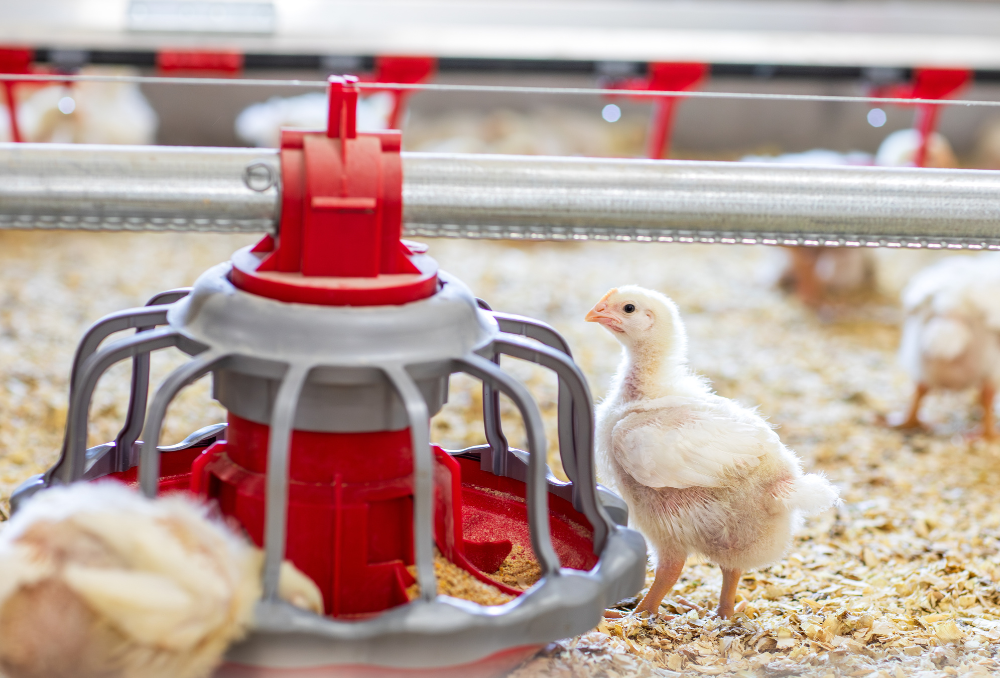
Chile regained its status as a country free of highly pathogenic avian influenza (HPAI) in poultry after completing the sanitary measures and meeting the deadlines established by the WOAH to eradicate the outbreaks detected in 2026. On June 24, the Agricultural and Livestock Service (SAG) officially announced that the requirements had been met and that this important health status had been reinstated.
Since the onset of the animal health emergency in early March, SAG has recorded 45 outbreaks among backyard poultry and three outbreaks at commercial farms, which led to the temporary loss of disease-free status. After successfully carrying out surveillance, inspection, cleaning, and disinfection measures at the affected facilities, and confirming the absence of viral circulation in poultry, Chile once again met the requirements set by the WOAH, strengthening its position as a trusted food supplier and facilitating access to international markets for domestic poultry products.
The Minister of Agriculture, Jaime Campos, hailed the announcement as good news for the sector and reiterated the call to maintain biosecurity measures given viral persistence in wild birds.
Minister Campos also explained that “we are notifying our trading partners of this development so that the target markets we usually serve can be reopened. “This has been a long and serious undertaking carried out by our Agricultural and Livestock Service, and it demonstrates that their work has been highly effective and efficient. I want to congratulate and commend all SAG officials who have been involved in this effort.”
The National Director of SAG, Domingo Rojas, also recognized the work carried out by the Service, noting that “we have regained our status as a country free of avian influenza, which we have already reported to WOAH. We hope to promptly resume talks with markets that remain closed so that we can once again export our high-quality products. Thanks to the work of our technical teams, we were able to regain disease-free status in record time, which speaks to the quality and professionalism of our specialists.”
The president of ChileCarne, Juan Carlos Domínguez, said that “this is excellent news for the sector and it reaffirms Chile’s reputation for food safety and boosts the confidence of international markets in our products. This achievement was possible thanks to coordinated efforts between SAG and the agricultural sector, a collaboration that is key to the country’s competitiveness and export growth.”
This accomplishment once again shows the importance of health zoning, an internationally recognized mechanism that limits the effects of an outbreak to the affected areas, thereby preventing the entire country from being subject to trade restrictions. Thanks to this tool, Chile was able to maintain strategic markets and mitigate the economic impact of the outbreak, resuming shipments in less than 72 hours to key destinations such as the United States, Puerto Rico, Mexico, and Canada, which together account for 82% of the value of Chilean chicken exports.
The new health status also opens up an opportunity to further normalize access to markets of particular relevance to the sector. One of these is Colombia, a country that does not currently recognize zoning mechanisms and which considers this a fundamental requirement for fully restoring trade in Chilean poultry products. Likewise, efforts will continue with China—one of the most important markets for Chilean agri-food exports—with the goal of reopening and normalizing shipments.
Chicken accounts for about 48% of Chile’s total meat production and is the country’s second most exported meat. The combination of round-the-clock surveillance, strict biosecurity protocols, and seamless public-private coordination has enabled Chile to maintain one of the most robust health systems in the region, a fact that is once again being recognized internationally.
Chile declares itself free of Highly Pathogenic Avian Influenza in domesticated birds
Últimas publicaciones
-
 ChileCarne: 10 years supporting the growth of Chile's poultry and pork exports
 -
 More efficiency, lower impact: Making poultry and pork production more sustainable
 -
 Exclusive interview with Paula Estévez, Undersecretary for International Economic Affairs: “The answer to a complex international situation is to further diversify and strengthen access to new markets”
 -
 2026 Annual Assembly: ChileCarne forecasts challenges and opportunities for meat exports
 -
 ChileCarne discusses the strategic importance of food safety at a seminar organized by ACHIPIA
 -
 Soy, innovation, and animal production: Technical mission examined key trends for the sector